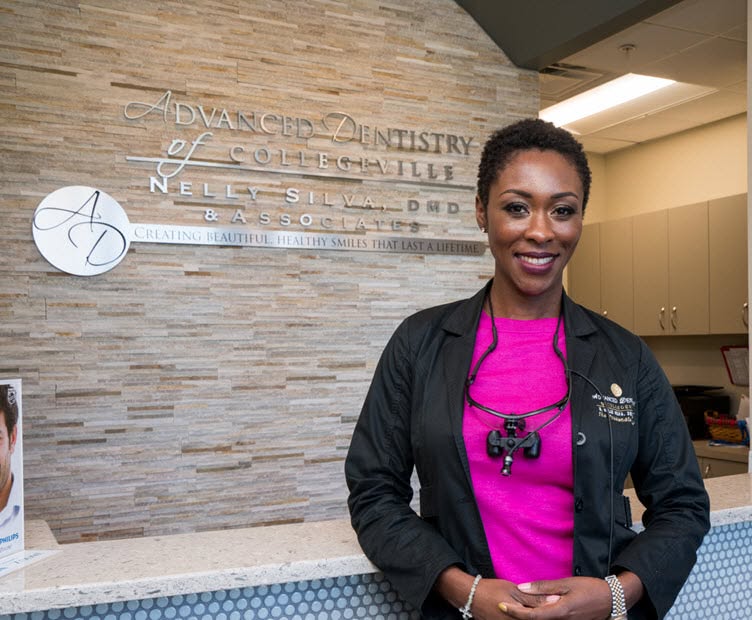
Dr. Nelly Silva completed a TMD residency through the American Academy of Craniofacial Pain, and she measures how your jaw joints and muscles work before recommending any treatment.
Dr. Nelly Silva, DMD
Your temporomandibular joints, or TMJs, connect the lower jaw to the skull just in front of each ear. They hinge and slide every time you talk, chew or swallow. When the joints, the chewing muscles and the way your teeth meet stop working together, the result is a temporomandibular disorder, called TMD or simply TMJ.
TMJ therapy brings those parts back into balance. Dr. Silva trained in neuromuscular dentistry, so she treats the jaw as one system. A bite that closes the jaw in a strained position presses on the joints and pulls on the muscles of the face, neck and shoulders, which is why the pain often shows up far from the jaw.
TMD often goes unrecognized because the pain appears somewhere other than the jaw. An evaluation makes sense if any of these happen regularly.
Morning headaches or tension at the temples, often from clenching during sleep.
Clicking, popping or grating when you open, chew or yawn.
A jaw that catches, locks or no longer opens as wide as it used to.
Soreness around the joints, or tooth pain that seems to move from tooth to tooth.
Chipped, cracked or loose teeth, and fillings or crowns that keep breaking.
Tension in the neck, shoulders or upper back that follows a tired jaw.
Stuffiness, congestion or aching in the ears with no ear infection found.
A partner hears grinding at night, or you catch yourself clenching by day.
Book an evaluation if jaw pain or headaches keep coming back, if your jaw locks, or if dental work keeps breaking.
Book NowTreatment chosen on guesswork can make TMD worse, so therapy starts with testing. The results show the gap between where your jaw sits now and where its joints and muscles rest without strain.
An oral exam and gentle pressure on the jaw joints and muscles to find tender, overworked areas.
Jaw and neck movement plus balance testing show how your jaw position affects posture and the rest of the body.
Our Vatech CT scanner images both joints with your mouth closed, your jaw forward and your mouth fully open.
TENS relaxes the jaw muscles with gentle pulses, then the K7 records the range and path of your jaw movement in 3D.
Electrosonography records the sounds your joints make as they move, which helps show how far any joint disease has progressed.
A volumetric airway analysis checks whether your jaw position is narrowing the space you breathe through at night.
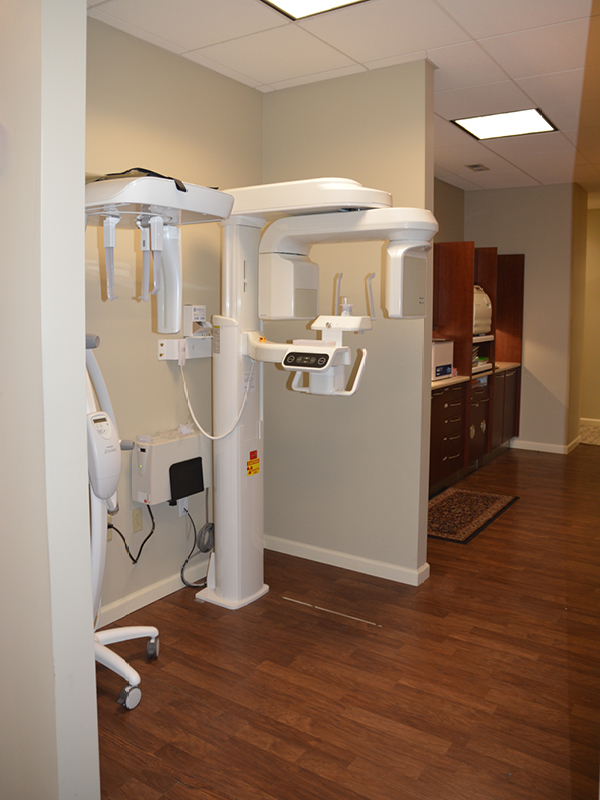
Every test is done in our own office, so the measurements and the conversation about them happen in the same place.
Dr. Silva presents every option that fits your diagnosis, with what each one can and cannot do, so your decision is an informed one.
Many patients combine more than one option. Your plan depends on the cause and stage of your disorder.
 Dr. Nelly Silva, DMD
Dr. Silva's training covers the jaw joints, the bite and sleep, so she looks for the cause of TMD rather than treating one symptom. She considers educating you on your condition part of her job, and every finding is explained before you decide anything.
"Takes time for questions and gives detailed explanations. I felt very comfortable and relaxed."
Lynn Maison, Google Review
Each step builds on the one before, so your treatment is planned from your own measurements.
We review your symptoms and health history, then examine your teeth, jaw joints and muscles.
CT imaging, K7 tracking, joint sounds and airway analysis show what is driving your pain.
Dr. Silva walks you through the findings, answers your questions and lays out each option.
Follow-up visits measure how your joints and muscles respond, and the plan is adjusted along the way.
How quickly symptoms ease depends on the cause and stage of the disorder. Dr. Silva gives you a realistic estimate once testing is complete.
The cost of TMJ therapy depends on what testing shows and which treatment fits. Coverage for TMJ care varies by plan, so ask us to review your benefits with you.
Answers to what patients in Collegeville ask most about jaw pain and TMJ care.
TMJ stands for the temporomandibular joint, the hinge that connects your lower jaw to your skull in front of each ear. In dentistry the term also covers TMD, the disorders that affect that joint, the chewing muscles and the bite. Dentists treat it because the way your teeth meet decides where the jaw closes and how hard the joint and muscles have to work.
For many patients the face feels more relaxed as muscle tension and soreness ease. Chewing muscles that have grown bulky from years of clenching can soften once they stop working so hard. Wear on the teeth and bone changes in the joint do not reverse on their own, so Dr. Silva explains what is realistic for you once testing is complete.
Yes. Physical therapy can improve jaw and neck mobility and ease muscle pain, especially when posture plays a part. Exercises cannot change how your teeth meet, so it belongs alongside dental care when the bite is involved. Your evaluation includes neck range of motion and balance testing, which shows whether physical therapy belongs in your plan.
TMJ disorders are often staged by how far the joint has changed, from early disc displacement with clicking to later stages with wear in the bone. Stage 4 generally describes an advanced joint with degenerative bone changes, often with grating sounds and limited movement. CT scans and joint sound recordings in our office show the condition of your joints, and the stage shapes which options make sense.
Often, yes. Clenching and grinding at night are common in people who snore or have sleep apnea, and both strain the jaw. Dr. Silva is a Diplomate in Dental Sleep Medicine, so your evaluation includes an airway analysis and questions about how you sleep.
A night guard protects your teeth from grinding, but it does not place your jaw in a measured position. When the bite or the joints are driving your symptoms, a guard can cushion the damage without addressing the cause. Testing shows whether a guard is enough or whether you need treatment built on your measurements.
Your evaluation ends with answers: what is behind your jaw pain and which options fit. Our office is at 399 Arcola Road, Collegeville, PA 19426.