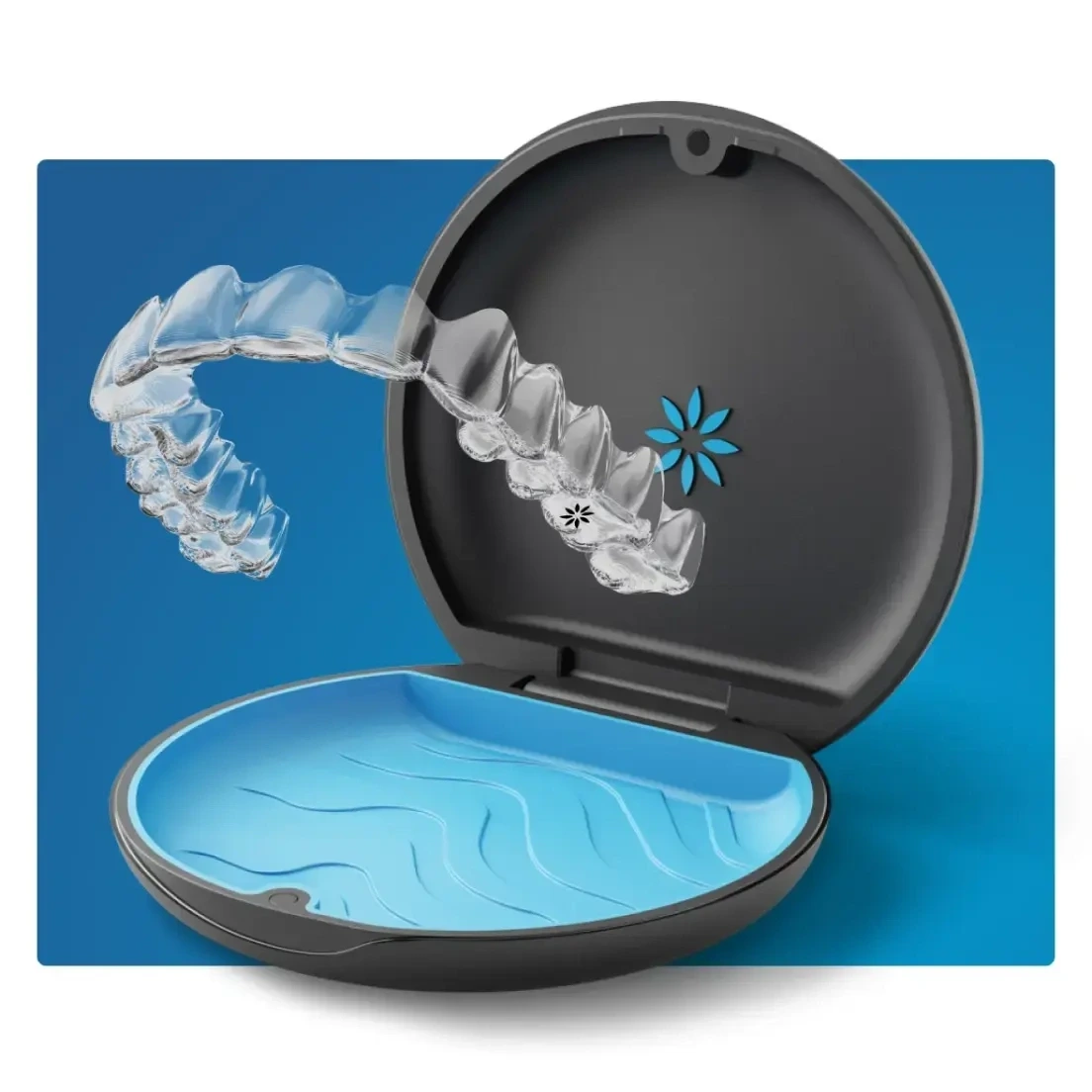
Invisalign clear aligners straighten crowded, gapped and rotated teeth with removable trays instead of brackets and wires. Dr. Nelly Silva plans every case on an iTero 3D scan of your teeth and bite.
Clear aligners are thin, custom trays that move your teeth a small, planned amount with each new set. Most people around you will not notice them, and you take them out to eat, brush and floss.
Straight teeth are also easier to keep clean. Overlapping teeth leave tight corners where plaque builds up, and an uneven bite wears some teeth faster than others.
Clear aligners handle most of the alignment problems we see. Your scan and exam confirm whether they suit your teeth.
When there is not enough room, teeth overlap and twist. Aligners create space step by step and line them back up.
Spaces between the front teeth close gradually as each set of trays draws the teeth together.
Small attachments bonded to a tooth give the tray something to grip, so it can turn a rotated tooth into line.
Many bite problems where the upper and lower teeth do not meet evenly can be improved with aligners.
When some upper teeth sit inside the lower teeth, aligners can move them back so the bite closes properly.
Teeth that moved back after braces, often the lower front teeth, can be straightened again without brackets.
Clear aligners fit most crooked teeth, but not every case. Here is where each option fits; your exam narrows it to one.
Moving teeth safely means knowing the roots, the bone and the bite, not only what shows when you smile. These are the tools we use to plan and follow your aligner case.
A digital 3D scan of your teeth replaces putty impressions and becomes the blueprint for every set of trays.
3D imaging shows root position and bone support before any tooth is moved.
Measures jaw muscle activity and how your teeth meet, so the new alignment suits your bite.
Visits about every six weeks let Dr. Silva confirm your teeth are tracking with each new set of trays.
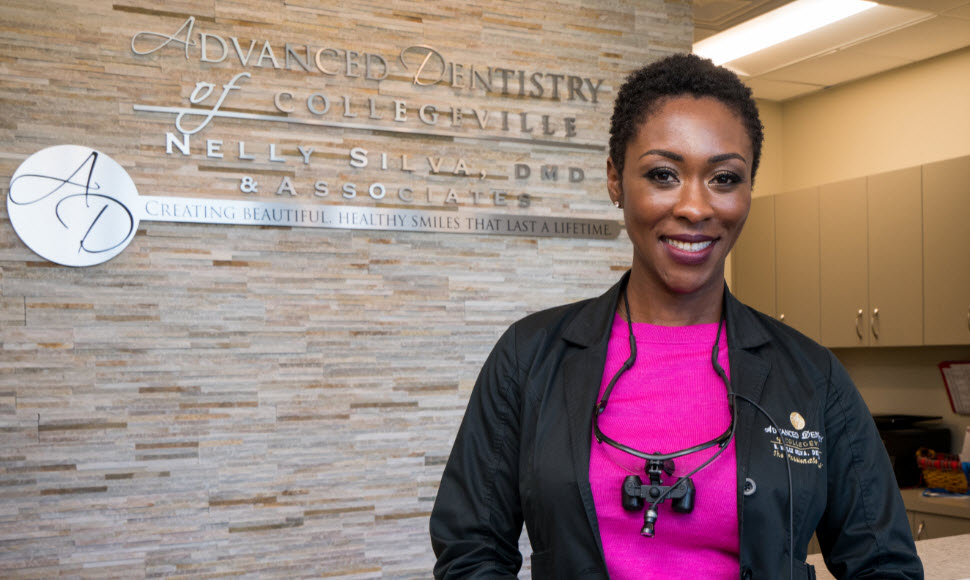
Straightening teeth with aligners changes how they meet. Dr. Silva's training in orthodontics, neuromuscular dentistry and jaw pain means your plan accounts for your bite and jaw joints, not only the six teeth that show. She also teaches at Temple, and she asks patients to call her Nelly.
Dr. Nelly was so kind, professional, explained everything and put in process a plan for my teeth. I get a little anxious at the dentist and Dr. Nelly put me at ease.Kristen K., Google review
They go over everything about what they see and offer what is needed to keep your teeth and gums to be healthy and stay healthy.Coleman Family, Google review
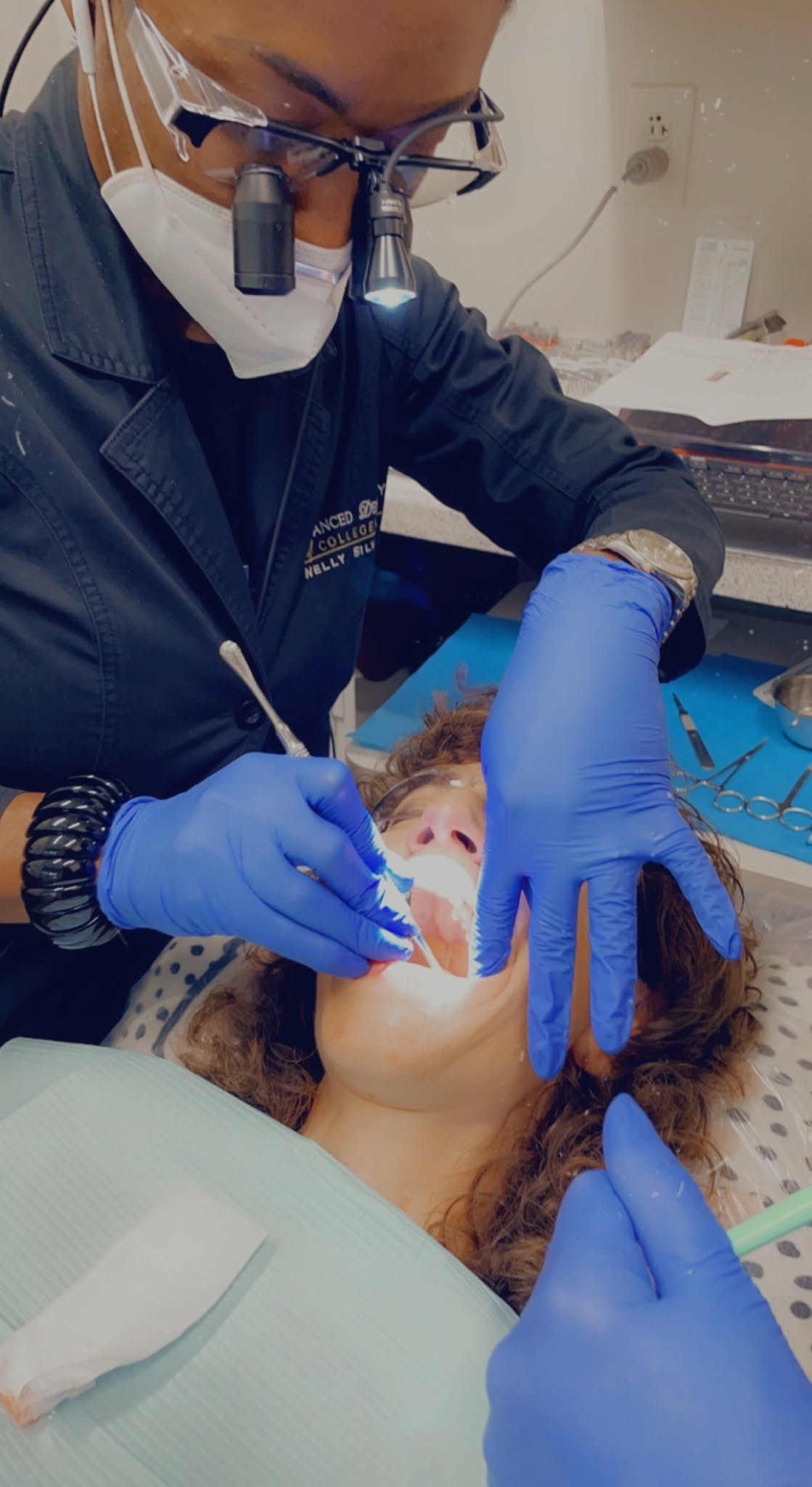
We review your dental and medical history, check your teeth, gums and bite, then take an iTero scan.
Dr. Silva maps how each tooth will move and goes over the time frame, cost and payment options with you.
You switch to a new set of trays about every two weeks and come in for a progress check about every six weeks.
Teeth try to drift back, so a retainer and regular cleanings protect the result for the long term.
Clear aligner cost depends on how far your teeth need to move and how many sets of trays your plan needs, so we give you exact figures after your scan. Some PPO plans include orthodontic benefits, and we can check yours before you decide.
We work with PPO dental insurance plans and check your orthodontic benefits for you. We do not accept Medicaid.
Spread the cost of your aligners over time with a payment plan.
No insurance? Our dental savings plan is an option for patients without coverage.
Most cases take 6 to 18 months. Each set of aligners is worn for about two weeks, and the total depends on how far your teeth need to move. Your iTero scan gives you a time frame before you start.
It depends on how complex your case is and how many sets of trays you need. We give you the exact cost after your consultation and scan, check your orthodontic benefits, and offer payment plans and a dental savings plan.
Plan on wearing your aligners most of the day and night, taking them out only to eat, drink anything other than water, and brush. Put them back in soon after meals so your teeth keep moving on schedule.
Most people feel pressure or mild soreness for a day or two when they switch to a new set. That is a sign the trays are working, and it eases quickly.
Some people notice a slight lisp for the first few days while the tongue adjusts. It usually fades quickly. Read more in our article on how clear aligners affect speech.
There is no upper age limit for moving teeth. What matters is that the gums and supporting bone are healthy. If they need attention first, our periodontist, Dr. Michael Strassberg, can treat them through our periodontics care before straightening begins.
Not always. Very slightly uneven front teeth may look better with veneers, and severe crowding or mismatched jaws may need orthodontic or surgical care. See all the ways we treat crooked teeth; your exam shows which option fits.
One visit with a 3D scan tells you whether clear aligners will work for your teeth, how long treatment takes and what it costs. Then you decide.